 One of the big advantages of being a small business is that a small business is generally treated as a “tax flow through” entity. That means the entity itself pays no income tax, and all the business’ profits (or losses) are reported on the individual income tax returns of the business’ owners. This advantage is not available to large businesses, usually organized as C-corporations, which pay taxes at both the corporate level and then again at the individual owner level. In essence, the profits generated by large businesses are doubled taxed- taxed twice.
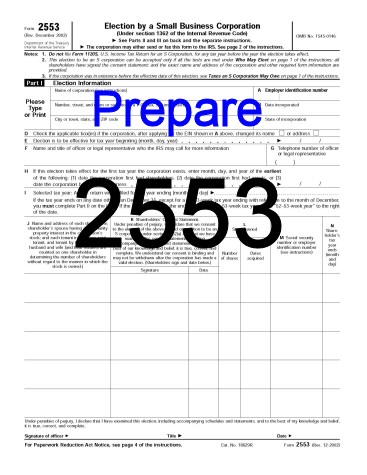
To take advantage of this small business tax advantage, a small business must be properly organized and must file the corporate papers with the Internal Revenue Service. In particular, corporations must file an IRS Form 2553 before certain deadlines. This is referred to as taking the S-election to become an S-corporation.
Routinely, when the GRIFFITH LAW GROUP forms a small business corporation for a client, we will file the Form 2553 within a week or so after the corporation is formed with the Secretary of State. Unfortunately, many corporations are formed without having timely filed the Form 2553. The good news is the IRS has, in recent years, made it significantly easier to take the S-election retroactively, if the original filing deadline was missed.
Not every corporation is eligible to take the S-election. For example, large corporations with more than 100 shareholders cannot take the S-election and will be taxed as C-corporations. Also, an S-corporation cannot offer different classes of stock. And, only United States citizens can own stock in an S-corporation. In fact, only the following people are eligible to be S-corporation shareholders—
• individuals, other than nonresident aliens;
• an estate;
• an individual’s bankruptcy estate;
• a grantor trust;
• the administrative trust of a decedent (limited to two years after death;
• a testamentary trust (limited to two years after death);
• a voting trust);
• an electing small business trust);
• a qualified subchapter S trust (“QSST”);.
• certain exempt organizations;
• certain qualified retirement plans; and
• an S-corporation that owns a qualified subchapter S subsidiary (“QSSS”).
• individuals, other than nonresident aliens;
• an estate;
• an individual’s bankruptcy estate;
• a grantor trust;
• the administrative trust of a decedent (limited to two years after death;
• a testamentary trust (limited to two years after death);
• a voting trust);
• an electing small business trust);
• a qualified subchapter S trust (“QSST”);.
• certain exempt organizations;
• certain qualified retirement plans; and
• an S-corporation that owns a qualified subchapter S subsidiary (“QSSS”).
In no case can a foreign trust be an S-corporation shareholder.
A corporation with a shareholder other than one of those listed above cannot make an S-election, and the transfer of S-corporation stock to an ineligible owner terminates the S-election. In creating these shareholder eligibility requirements, Congress wanted to ensure that the income of an S-corporation would be taxed directly to individuals and specifically U.S. citizens.
So, if you own shares in an S-corporation, an important consideration is whether there is a buy-sell or other agreement in place that prevents other shareholders from transferring shares to an ineligible person or entity, thereby making the corporation a C-corporation subject to double taxation. With proper drafting, a buy-sell or other such agreement can preserve a properly taken S-election for a small business corporation.
